

 By amber@cossni.com
Types of Leather Wallets: A Style Guide for Brands Planning a Collection
Before planning a wallet collection, brands need to view the market through distinct product categories. Each category serves different customer preferences, price points and purchasing needs. Types of leather wallets range from everyday bifolds and minimalist card holders to long zip-around designs. Each style offers different opportunities for brand positioning and sales.
A well-planned assortment can help brands reach multiple customer segments without making the product range unnecessarily broad. This guide examines the main leather wallet styles, their key features, target customers and commercial potential. It helps brands build a collection that aligns with their market positioning and business goals.
Bifold and Trifold Leather Wallets: The Core SKUs
Every wallet collection stands on the same two load-bearing styles, and almost everything else is built around them.
Bifold Leather Wallet: The Everyday Bestseller
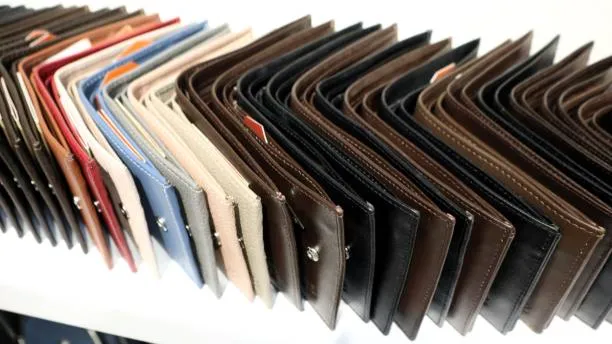
The bifold folds once and stays slim in a pocket. It is the default wallet for men’s lines, the safest volume SKU in the category.
Most collections should lead with two bifolds:
- Classic: black or brown full-grain leather, for the heritage buyer.
- Modern: a textured or colored finish, for the gift buyer.
The pair covers the two biggest purchase occasions for the same construction. That keeps your production simple while your shelf stays broad. If the line can only afford one bifold, the classic wins on volume. The modern wins on gift sales. The tiebreaker is usually your customer’s age bracket. The classic skews older; the modern skews toward first-time leather buyers.
Trifold Leather Wallet: Capacity for Value Buyers
Trifolds fold twice and carry more card slots and a bigger cash compartment, at the cost of pocket bulk. They sell to buyers who prioritize capacity and organization over slimness. That makes them a strong value-tier SKU, and a natural home for ID windows and extra slots. Wholesale buyers often pair a bifold and a trifold as the two anchor SKUs of a starter collection. Together they cover the everyday customer and the organizer at two different price points. Trifolds also make a natural ID-window and RFID carrier. The extra fold gives the design room for a window without crowding the card slots. It is a small detail. Still, it lets one SKU serve the organized buyer and the security-conscious buyer at once.
Long and Zip-Around Leather Wallets: Growth Segments
While bifolds hold steady volume, one format keeps claiming more shelf space for retailers. And it closes with a zipper.
Long Zip-Around: A Retail Growth Category
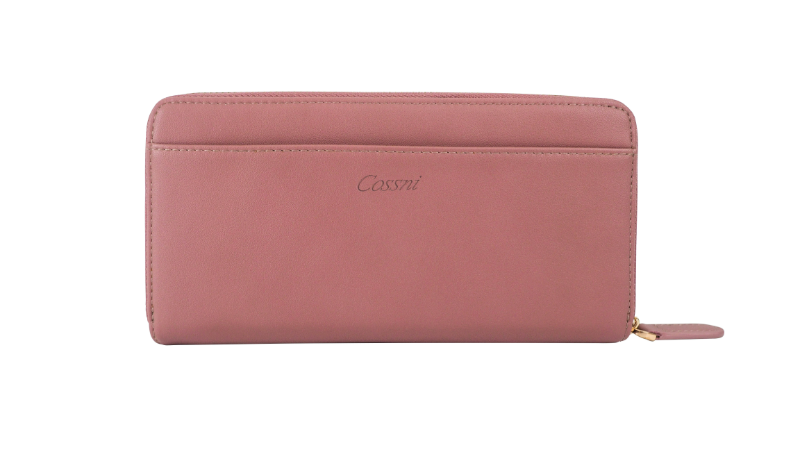
The long zip-around wallet is fully enclosed and spacious enough for cash, cards and coins. It even reads as a giftable item before you wrap it. Retail interest in this segment is real and rising. With its mid-to-premium price positioning, this style pairs naturally with handbag collections. Our Women’s Leather Zip-Around Long Wallet is designed to meet this demand, offering a product that retail brands can add to expand their women’s collections and introduce a higher-ticket option.
Feature expectations are specific here: a zipped coin pocket, an interior layout that keeps bills flat, and a smooth zip action that feels quality from the first open. Customers often check these details in-store, and they help distinguish an entry-price long wallet from one that justifies a premium ticket.
Snap Long Wallets: The Lighter Alternative
A snap-closure long wallet offers similar organization in a lighter, less hardware-heavy package. Compared with a zip-around, it is cheaper to produce and appeals to buyers who find full zips bulky. As a practical second SKU in the long-wallet segment, it gives price-sensitive customers an entry point without changing the familiar long-wallet format.
Our Multi-Card Snap Long Wallet serves as a reference design for this style. Offering both snap and zip-around versions allows buyers to cover different customer preferences within the same category. Sampling is also faster with the snap format because fewer hardware components need to be fitted. This makes it easier for buyers to test the long-wallet segment with a smaller upfront commitment.
Vertical Leather Wallets: A Differentiated Niche
Differentiation SKUs earn their shelf space through search, not through volume. They win the queries nothing else in your catalog can.
Vertical vs Horizontal: What Buyers See
A vertical wallet opens along its long edge. Bills sit vertically, and the wallet reads taller and slimmer in the hand. It is an everyday-carry aesthetic popular in urban menswear.
The vertical vs horizontal comparison matters because customers search for both. A vertical SKU lets your catalog show up for queries a horizontal-only line cannot reach.
| Aspect | Horizontal | Vertical |
|---|---|---|
| Bill orientation | Bills sit horizontal | Bills sit vertical |
| Where it is carried | Back pocket | Front pocket or a small bag |
| In-hand look | Wider, classic | Taller and slimmer |
From a production view, vertical wallets cut similarly to bifolds. The pattern is rotated, not reinvented. Adding a vertical SKU rarely means new machinery or a different leather yield. That keeps the trial cheap.
When to Add Vertical Leather Wallets SKUs
Add a vertical wallet once your core bifold and long styles are in place. It works best as a differentiation SKU rather than a foundation product, particularly for lines targeting modern menswear or everyday-carry customers.
Consider adding this style when:
- Your target customers value differentiation: A vertical wallet gives your sales team another selling point when buyers already carry standard bifold designs from multiple suppliers.
- Wholesale inquiries show growing interest: Search trends and direct buyer requests can indicate demand. When buyers start specifically asking for vertical wallets, the style may already have a place in the market.
- Your inventory plan allows for a complementary SKU: Vertical demand tends to be steady rather than spectacular. Start with modest stock depth instead of committing to inventory on the same scale as bifolds.
Treat vertical wallets as a complementary addition to the collection, not a headline SKU.

Slim, Card Sleeves and Money Clips: The Minimalist Tier
The minimalist tier is where young customers enter the category. It is also where the cheapest production cost meets the easiest impulse purchase.
Card Sleeves and Holders as Entry SKUs
Card sleeves are the cheapest wallets to produce, the fastest to sample, and the easiest impulse purchase. That makes them the ideal entry SKU for a new brand and the classic add-on at checkout. ملكنا Minimalist Pebbled Leather Card Sleeve و Pocket Card Holder are built for exactly this role. Both take logo debossing cleanly for private label. That makes them the easiest first custom project for a brand testing the water. Sleeves also do quiet work in gifting. A three-piece set of card holders at a friendly price point is a stockist favorite for the holiday table. It moves inventory in multiples rather than singles.
Slim Bifolds for the Everyday-Carry Crowd
The slim bifold keeps the classic wallet structure but reduces its capacity to a few cards and folded bills. It suits minimalist buyers who want more organization than a basic card sleeve without the bulk of a full bifold. Its price point also sits between these two formats, giving customers another option when comparing wallet styles.
For brands planning a wallet collection, a slim bifold adds variety without introducing an entirely different design category. It also appeals to customers who find standard bifolds too bulky but still prefer a traditional folding wallet. In this way, the slim version extends the reach of the classic bifold to buyers with different everyday carrying preferences.

RFID-Blocking as a SKU Feature
RFID shielding is a relatively simple feature to add to a wallet collection. It requires little additional material or tooling and gives brands another product attribute to address in their catalog.
Adding RFID Versions to Existing Styles
RFID shielding is a lining upgrade rather than a new design. An RFID-blocking layer can be added inside an existing bifold, long wallet or card sleeve, allowing brands to offer standard and RFID versions using the same basic pattern. This approach usually avoids new tooling and reduces the need for additional sampling.
The shielding layer typically uses metallic-fiber lining laminated inside the card area. It adds a small amount to material costs while requiring few changes to the existing production process. For brands expanding a wallet range, this makes standard and RFID versions relatively straightforward to develop across multiple styles.
Positioning RFID in Your Catalog
RFID shielding should be presented as a practical feature that helps reduce the risk of unauthorized contactless card scanning, rather than as a guarantee of complete security.
When adding this feature to product descriptions, consider three points:
- Suitable styles: RFID versions can be considered for travel wallets, everyday-carry styles and women’s long wallets, depending on customer demand.
- Product descriptions: Use specific wording such as “RFID-shielded card slots” to describe where the lining is applied.
- Claim limitations: Explain that the lining helps block contactless card signals, but avoid claims of absolute protection.
A short feature description in the catalog is usually sufficient. More technical details about the lining and its placement can be included on the individual product page.
Building a Balanced Assortment
An assortment is not a list of products. It is a pricing system, and every style in it should pull a distinct buyer.
Mixing Price Points and Styles
A balanced starter collection covers three price bands with six to eight SKUs:
- Entry: a card sleeve.
- Core: two bifolds, classic and modern.
- Women’s shelf: a trifold, a long zip-around and a long snap wallet.
- Differentiation: a vertical or slim bifold.
Every style should feed a different purchase moment. Then the SKUs reinforce each other instead of cannibalizing. The test is simple. If two SKUs win the same customer for the same reason, one of them is costing you money. Sequencing matters as much as selection. Most retailers open with the bifold core and the entry sleeve. They add the long-wallet pair once the women’s shelf proves demand. Vertical or slim styles come later, when buyers begin asking for them. This growth path keeps inventory risk small while the data accumulates.
Size and Capacity Specs by Style
State capacity on the product page in numbers customers understand:
- Card slots.
- Cash compartments.
- Coin pocket: yes or no.
- Closed dimensions.
Capacity is the second buying filter after style. A spec table converts browsers into buyers. Keep the size and capacity spec consistent across styles. Then the collection reads as one system rather than a pile of samples. Consistency is what makes a six-SKU line feel like a brand instead of a clearance rail. Size consistency has a merchandising bonus. When every style shares a stated dimension format, customers learn to read your spec table once. They trust it across the whole collection. That shortens the comparison stage right where sales are won.
| Style | Typical capacity | Price band | Customer it pulls |
|---|---|---|---|
| Card sleeve / holder | 4–8 cards, no cash focus | Entry | Minimalist and first-time buyers |
| Bifold / trifold | 6–12 cards, cash compartments | Mid | Everyday and value buyers |
| Long zip-around / snap | 10+ cards, coin pocket | Mid to premium | Women’s accessories and gift buyers |
| Vertical / slim bifold | 4–8 cards, folded bills | Mid | Everyday-carry and urban menswear |
Final Thoughts
Assortment beats any single hero SKU. Lead with bifolds for volume. Add the long zip-around segment for growth. Use card sleeves for entry price and RFID versions for demand coverage. Let vertical or slim styles differentiate your catalog.
The types of leather wallets you stock should map to the customers you already serve. Do not chase the ones you hope to gain. كوسني produces every style in this guide daily. Browse our محافظ & accessories category. Or contact us for stock wholesale and OEM/ODM customization with your logo and colors.
FAQ
Which wallet styles sell best?
Bifolds are the consistent volume sellers in men’s lines. Long zip-around wallets are the strongest growth segment in women’s accessories retail. Card sleeves sell best as entry-price and impulse SKUs. The most reliable assortment pairs a bifold anchor with a long wallet and an entry-price sleeve.
What is a long zip-around wallet?
A long zip-around wallet is a larger wallet that zips closed around three sides. It protects cash, cards and coins while staying organized. It is a staple of the women’s accessories shelf and a strong gifting category. See our Women’s Leather Zip-Around Long Wallet as a reference.
Should my store carry vertical wallets?
If your customer base skews modern menswear or everyday-carry, yes. A vertical wallet differentiates your catalog and captures searches a horizontal-only line misses. Add it after your core bifold and long styles, not instead of them.
How many SKUs does a starter collection need?
Six to eight SKUs across three price bands is the practical minimum. Start with an entry card sleeve, two bifolds and a trifold. Add one or two long wallets. Finish with one differentiating style, such as vertical or slim. Fewer than that and you cannot test which segments your market rewards.


